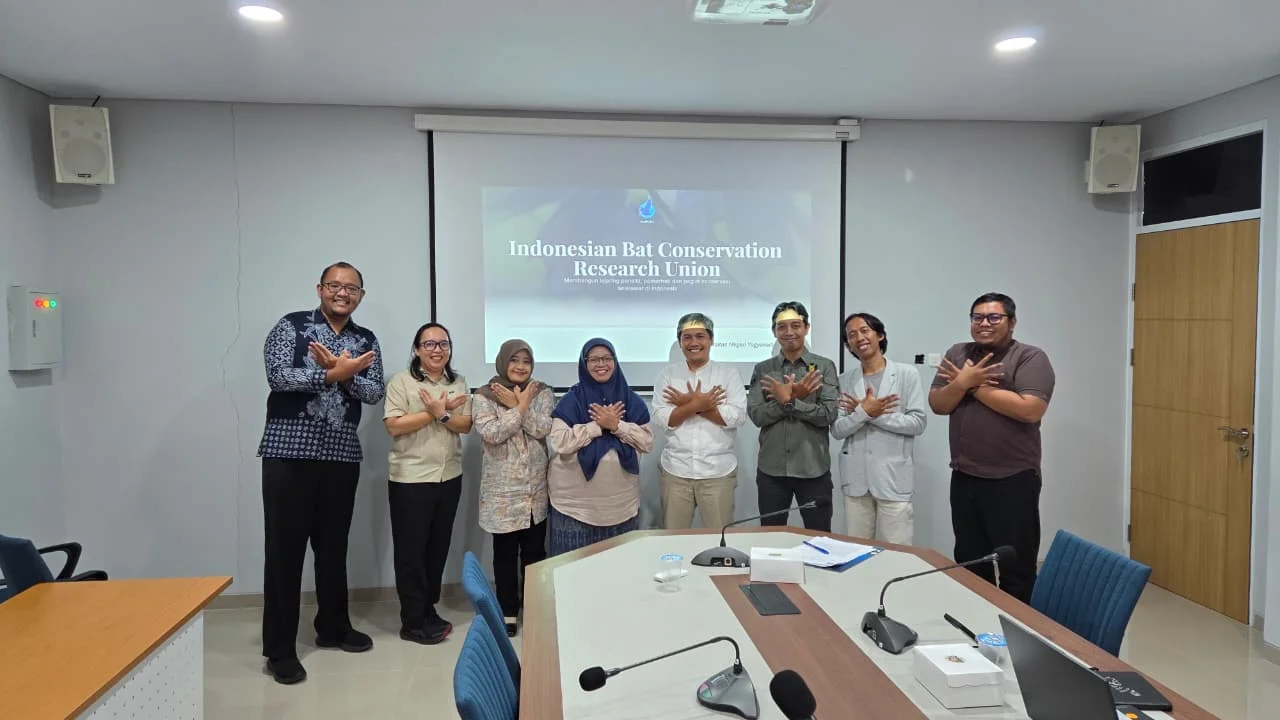
YOGYAKARTA - The Indonesian Bat Conservation Research Union (InaBCRU) has officially established a strategic collaboration with the Faculty of Mathematics and Natural Sciences (FMIPA) at Universitas Negeri Yogyakarta (UNY). This landmark alliance focuses on advancing bat research, education, and ecological conservation across Indonesia. The formal agreement was signed on Wednesday (July 8, 2026) at the FMIPA UNY Conference Room. The event was attended by the executive leadership of FMIPA UNY alongside InaBCRU board members, led directly by Chairman Sigit Wiantoro, Ph.D. The partnership establishes a comprehensive framework encompassing joint research development, student internships, scientific publications, summer course programs, field work, conservation lab initiatives, and various educational experiments.

Sigit Wiantoro, Ph.D., Chairman of InaBCRU, expressed his sincere appreciation to FMIPA UNY for becoming the very first university to officially partner with InaBCRU in protecting Indonesia's bat populations.
"This collaboration marks a strategic milestone in strengthening the synergy between conservation organizations and academia. Together, we aim to produce high-impact research, build human resource capacity, and champion science-based conservation," stated Sigit.
This alliance adds to InaBCRU's growing global and regional network, which already includes strategic partnerships with Bat Conservation International (BCI), the Global Bat Sciences Network (GBatNet), and the Gunungkidul Regency Library and Archives Office.
